 TruthfulPaws
 Best Self-Cleaning Litter Boxes: 6 Compared


Quick Verdict
For most single-cat homes, the Fumoi (~$200) is the best starting point — 12-15 day waste intervals, solid odor control, best value by far. If safety is your #1 concern, the PuraMax 2 (~$380) is the only box where the drum physically cannot trap a cat. Need health monitoring? The Litter-Robot 4 has caught 18+ UTIs early via visit tracking.
Find your litter box
Tap your situation. We'll tell you what to buy and why.
12–15 days between empties for one cat. Odor control matched the Litter-Robot 4. 83% satisfaction rate.
Check Price on Amazon Read full review →
18+ confirmed UTI catches via visit tracking. Nothing else comes close.
Check Price on Amazon Read full review →
Only box where the drum physically cannot trap a cat. 5/5 safety score.
Check Price on Amazon Read full review →
106L interior fits 20+ lbs. Lowest entry step of any automatic box.
Check Price on Amazon Read full review →
Lowest entry step of any automatic box (6-7 inches). Our vet recommends max 4-6 inches for joint conditions — the MeoWant is the closest automatic option. LR4 is ~10 inches, Neakasa ~15 inches.
Check Price on Amazon Read full review →
Only box with a proven multi-cat track record at scale. r/litterrobot members report success with 5-7 cats across multiple units. Large capacity drawer reduces how often you empty it.
Check Price on Amazon Read full review →
Quietest at ~30 dB. UV-C sterilization. Power button corrodes at 12–18 months.
Check Price on Amazon Read full review →Scooping a litter box twice a day is not the worst part of owning a cat. But for some people it becomes the limiting factor. A disabled owner on Jackson Galaxy's YouTube channel described it without self-pity: "I went from crying about my litter box guilt every night I physically could not deal with the smell and labor of it to being able to consider it a weekly trash bag takeout task." An ADHD household called the LitterHopper add-on "a game changer" because maintaining optimal litter levels was the part that always fell apart. A woman with 16 rescued ferals said two Litter-Robots meant she could actually recover from an arm procedure without asking someone to scoop for a dozen cats.
These are not lazy people. They are busy people, disabled people, multi-cat people, and people who travel. The automatic litter box category exists to serve them.
What to Expect from Any Self-Cleaning Litter Box
Every box in this roundup requires clumping litter (non-clumping, crystal, and pellets will jam the mechanism), plugs into a wall outlet, and needs periodic deep cleaning no matter what the marketing says. Some percentage of cats will simply refuse a moving or enclosed box regardless of brand. If your cat is skittish around appliances or has never tolerated a covered litter box, factor that in before spending. According to Dr. Whittenburg, cats that are exposed to different box types when young tend to accept them for life. If an older cat refuses an automatic box, that preference should be respected: forcing it risks litter box avoidance, which creates bigger problems.
The basic mechanism is the same across all six: your cat goes, a sensor detects it has left, and after a short delay the machine rotates to sift clumps from clean litter and drop waste into a sealed drawer below. You empty that drawer every few days to two weeks. The clean litter stays and gets reused. Some boxes rotate inside a sealed globe (better odor control, but cats climb in through an opening). Others are open-top (cats exit freely, but odor escapes and litter tracks more).
The three things that separate good boxes from bad: safety sensors that reliably stop the drum when a cat is inside, sifting quality that doesn't smear or pass small clumps back, and waste sealing that contains odor between empties. Those are the basics every box shares. What they don't share is where they fail, and the marketing rarely mentions that part. We reviewed all six of the most popular self-cleaning litter boxes by analyzing thousands of real owner reports across r/litterrobot, r/CatAdvice, r/automaticlitterbox, YouTube, and Amazon. None of them is perfect. But for most situations, there is a clear pick.
TruthfulPaws Scores: How They Compare
Our scoring methodology weighs five components using community data, independent testing, and veterinary safety input. Each component is rated 1-5 and weighted to produce the composite score. Dr. Jamie Whittenburg, DVM provides veterinary review for this roundup (see What Your Vet Wants You to Know). Here is every product's full breakdown.
Scoring Breakdown
| Cleaning | Safety | Odor | Ease | Value | Score | |
|---|---|---|---|---|---|---|
| PuraMax 2 | 4.0 | 5.0 | 4.0 | 3.0 | 3.5 | 3.9 |
| Fumoi | 3.5 | 4.0 | 4.5 | 3.5 | 3.5 | 3.8 |
| LR4 | 3.0 | 4.0 | 3.5 | 4.0 | 3.0 | 3.5 |
| Casa Leo | 3.0 | 4.5 | 4.0 | 2.5 | 2.5 | 3.3 |
| MeoWant | 3.0 | 3.5 | 3.5 | 3.0 | 3.0 | 3.2 |
| Neakasa M1+ | 3.0 | 2.0 | 3.5 | 3.0 | 3.0 | 2.9 |
Every product scores 3.0 or above on Cleaning Performance, which means every box in this roundup actually cleans. The differentiation comes from everything else.
PETKIT PuraMax 2: Highest Score, Real Caveats
Read our full PETKIT PuraMax 2 review →
The PuraMax 2 earned its 3.9 by doing one thing no other box does: making entrapment physically impossible. The drum motor uses an incomplete gear that limits rotation to ~210 degrees. Even if the proximity sensor, the weight sensor, and the infrared detector all fail simultaneously, the drum cannot close on a cat. That earned a perfect 5/5 on Safety. According to Dr. Whittenburg, entrapment can cause fractures, lacerations, and internal injuries, along with psychological trauma that leads cats to refuse the litter box permanently, which is why the PuraMax 2's mechanical failsafe earned the only perfect score in this roundup. Zero noise complaints across 885 Amazon reviews. Triple odor system that 40+ verified buyers specifically praise.
The caveats are specific. About 5% of buyers report urine leaking under the drum, invisible until it damages the floor. The real size limit is body length, not weight: a 22-lb Maine Coon "will not fit," even though the spec sheet says 22 lbs. Deep cleaning means 25+ screws and 1-3 hours of monthly labor. WiFi (2.4GHz only) is required for auto-clean to function. And 11 of 14 YouTube reviews are sponsored, which means the unsponsored picture is harsher than what most people see before buying.
Perfect for: 1-3 cats under 14 lbs, on hard floors, with 2.4GHz WiFi, in a household where safety is the top priority.
Skip it if: your cat weighs over 14 lbs, pees high on walls, or you can't split a 5GHz WiFi network.
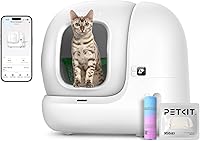
PETKIT PuraMax 2 Self-Cleaning Litter Box
Fumoi: Best Value by a Wide Margin
Read our full Fumoi review →
At roughly $200, the Fumoi costs less than half of anything else here. That alone would make it notable. What makes it genuinely good is the 95L drum, 15-liter waste drawer (12-15 day single-cat interval), and odor control that Agnes The Tuxedo's 2-week side-by-side found comparable to the Litter-Robot 4. Dual weight and infrared sensors have produced zero confirmed injuries across 2,189 Amazon reviews.
The 1-in-7 sensor failure rate within six months is the biggest risk. Failed units can flip upside down mid-cycle. The liner pad is an undisclosed consumable at ~$45/year. Customer service operates through WhatsApp (not phone or email), which is either convenient or alarming depending on your perspective. Twenty-three Amazon buyers purchased a second unit, which tells you the 83% who get a working one tend to stay happy.
Perfect for: First-time buyers, budget-conscious households, single-cat or dual-cat homes, frequent travelers.
Skip it if: your cat is elderly or arthritic (8-10 inch jump required), or you need guaranteed warranty support.
Litter-Robot 4 Bundle: The One That Catches UTIs
Read our full Litter-Robot 4 review →
The Litter-Robot 4 is the most expensive box here and it still ranks third in our scoring. The reason it earns a dedicated "Best for Multi-Cat" award anyway comes down to two things no competitor matches: documented health monitoring outcomes and proven long-term reliability at scale.
Eighteen-plus confirmed cases in the community where the Whisker app's visit tracking flagged UTIs and urinary blockages before owners noticed symptoms. Some owners also attribute kidney disease detection to the app, though our veterinary reviewer notes this connection is less clinically established. One owner on r/litterrobot described their cat's weight dropping on the app chart days before any behavioral changes appeared. Another caught a urinary blockage in time because the app showed their cat visiting the box 12 times in a day. This is not theoretical. It has saved cats' lives.
Our veterinary reviewer Dr. Whittenburg confirms that visit frequency tracking is clinically valuable: UTIs typically increase visit frequency, while a urinary obstruction decreases it. While the LR4's visit frequency tracking meets her clinical bar for useful data, its weight readings are affected by cat positioning and litter distribution, meaning the 2% accuracy standard she recommends for medical decisions isn't consistently met here either. Consistent trends over time are still worth investigating with your vet.
One Man Five Cats, who has tested 20+ automatic litter boxes over three years and whose category overview video has over 370,000 views, calls the LR4 with LitterHopper the #1 recommendation. Jackson Galaxy, who spent decades publicly opposing automatic litter boxes, reversed his position specifically for this product. That endorsement carries weight.
The 15-20% mechanical failure rate within 18 months is real. The DFI (Drawer Full Indicator) false positive is the most common failure; community fix is wiping the IR sensor with a dry cloth. Extended warranty ($59-$99) is near-mandatory. The bundle inexplicably omits the LitterHopper, the community's most-recommended add-on.
Perfect for: Multi-cat households (2-7 cats), cats with health conditions, frequent travelers, anyone who wants the most proven long-term track record.
Skip it if: your cat has chronic soft stools, you're a single-cat household watching the budget, or you're one of the 5-10% of cats that never adapts to enclosed designs. Dr. Whittenburg notes that in her practice, some clients' cats have refused the enclosed design, consistent with that community figure.
Casa Leo Leo's Loo Too: Quietest, With a Design Flaw
Read our full Casa Leo review →
The Casa Leo runs at ~30 dB. That is quieter than a whisper and 5-6 dB below the next quietest box in this roundup. Multiple independent YouTube tests with decibel meters confirm it. The UV-C sterilization lamp targets bacteria in the waste drawer, though our veterinary reviewer notes the clinical significance is unclear: the waste is already separated from the cat, and UV-C won't eliminate parasites. It's a differentiator in marketing more than in practice. Combined with the triple safety system (proximity radar + anti-pinch sensors + weight detection), it is a thoughtfully engineered machine.
The engineering flaw is the power button placement. It sits directly in the urine splash zone. Amazon reviewers report corrosion and failure at 12-18 months. The electronics base cannot be hosed down for deep cleaning. The waste drawer is narrow enough that false-full alerts and waste smearing on removal are common complaints. Add the ~$125 extended warranty to the $600 price and you're at $725 before the machine arrives.
Perfect for: Small apartments, noise-sensitive households, 1-2 cats under 15 lbs.
Skip it if: your cat weighs over 15 lbs, is elderly, or has ever urinated outside a box. Budget the extended warranty.
Casa Leo Leo's Loo Too Self-Cleaning Litter Box
MeoWant 106L: Built for Big Cats and Senior Cats
Read our full MeoWant 106L review →
The MeoWant 106L exists because most automatic litter boxes stop working above 14-15 lbs. At 106 liters of interior volume, verified Amazon buyers report success with cats at 15, 17, 18, 19, and 21 lbs. One 19-lb Ragdoll owner confirmed their cat "can use it with ease." The 6-7 inch step-up is the lowest entry point of any automatic litter box we reviewed, and the open-top design means fast cat adoption with no closing mechanism to scare nervous cats. Dr. Whittenburg recommends a maximum entry height of 4-6 inches for cats with mobility issues, which puts even the MeoWant at the upper edge of her clinical guideline, but it remains the closest option in the automatic category.
The health tracking weight sensor is not just inaccurate. It is non-functional. An 11-lb cat reads as 4.3 lbs. A 7.8-lb cat shows 1.15 lbs. Dr. Whittenburg notes that weight tracking needs to be accurate within 2%, a matter of ounces for most cats, to have any clinical value. The MeoWant's readings, which fluctuate by over a pound between consecutive weigh-ins, fall well outside that threshold. If health monitoring matters to you, this box cannot deliver it. The waste bin fills in 1-2 days for two cats. The grate system passes small clumps back into clean litter unless you use tofu litter with a 10-15 minute cleaning delay. No phone support. Email responses are slow.
Perfect for: Cats 15-20+ lbs, senior or arthritic cats, single-cat households.
Skip it if: you have 2+ cats (waste bin too small), you want health monitoring, or you use heavy clay litter.
MeoWant Self-Cleaning Cat Litter Box 106L
Neakasa M1 Plus: Open-Top Automation, Buyer Beware
Read our full Neakasa M1 Plus review →
The Neakasa M1 Plus is the most mature open-top automatic litter box according to One Man Five Cats. Its 17-inch litter area accommodates cats up to 20+ lbs, and the open design means cats can always exit during a cleaning cycle. App weight tracking works and catches health changes early. Setup takes 15 minutes.
The safety history demands disclosure. The original M1 (not the Plus) had a design defect that allowed the drum to over-rotate, causing confirmed injuries. The M1 Plus redesigned the motor gear with two missing teeth to prevent over-rotation. Dr. Whittenburg notes that entrapment causes panic, violent struggling, and can result in fractures, lacerations, and internal injuries, and often leads to permanent litter box avoidance. One Man Five Cats posted an urgent update on this exact issue. Multiple r/neakasa users ordered the M1 Plus from Amazon and received the original M1 instead. Verify your model before turning on auto-cleaning.
The IR bin sensors degrade and fail around month 6-7, often permanently. For senior cats or cats with urinary conditions, a machine that parks upside-down and locks them out is a medical risk, not an inconvenience. Dr. Whittenburg emphasizes that if getting to the litter box is difficult or painful, cats will eliminate elsewhere. Litter tracking is severe because the open-top design cannot contain it. Customer service is email-only, overseas, and slow. Amazon's headline 4.0/5 across 3,273 reviews reflects early ownership satisfaction. Reviews from mid-2025 onward average below 3.0.
Perfect for: Large cats (15+ lbs) who refuse enclosed boxes, two-cat households on hard floors.
Skip it if: you have carpet, use crystal/pellet litter, or want genuine set-and-forget operation. The CatLink Open-X is a direct competitor at roughly half the price.
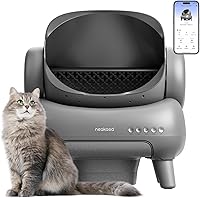
Neakasa M1 Plus Self-Cleaning Cat Litter Box
The Full Comparison
Every number below comes from community-verified data across Amazon reviews, Reddit threads, and independent YouTube testing. Not manufacturer spec sheets.
| Feature | PuraMax 2 | Fumoi | LR4 Bundle | Casa Leo | MeoWant 106L | Neakasa M1+ |
|---|---|---|---|---|---|---|
| TruthfulPaws Score | 3.9/5 | 3.8/5 | 3.5/5 | 3.3/5 | 3.2/5 | 2.9/5 |
| Price | ~$380 | ~$200 | Premium | ~$600 (+$125 warranty) | ~$333 | ~$429 ($299 on sale) |
| Design | Enclosed drum | Open-top globe | Enclosed globe | Enclosed globe | Open-top | Open-top |
| Interior Volume | 76L | 95L | 67L | Globe drum | 106L | 17" litter area |
| Max Cat Size | <14 lbs (body length) | 12-15 lbs practical | Large cats | <15 lbs | 20+ lbs | 20+ lbs |
| Entry Height | 7.9" | 8-10" | ~10" | High (no ramp) | 6-7" (lowest) | ~15" (highest) |
| Noise | 35 dB | 36 dB | ~35 dB | ~30 dB | ~35 dB | ~40 dB |
| 1-Cat Waste Interval | 7-15 days | 12-15 days | 7-14 days | 3-5 days | 2-3 days | ~10 days |
| 2-Cat Waste Interval | 3-5 days | 7-10 days | 5-7 days | ~2-3 days | Daily | 5-8 days |
| Litter Type | Any clumping | Clumping (clay/cassava/corn) | Fast-clump clay | Clumping only | Tofu best | Fine clumping clay ONLY |
| WiFi Required? | Yes (for auto-clean) | No | Yes (2.4GHz) | No | No | No |
| Health Tracking | Good (weight/visits) | Basic (buggy multi-cat) | Best (18+ documented catches) | Basic | Broken | Decent |
| Safety Rating | 5/5 (mechanical failsafe) | 4/5 (dual sensor) | 4/5 | 4.5/5 (triple sensor) | 3.5/5 | 2/5 |
| Smart Home | PETKIT app | Tuya app | Whisker app | Alexa + Google | App (2.4GHz) | App (2.4GHz) |
| Amazon Reviews | 885 | 2,189 | 686 | 280 | 63 | 3,273 |
| Year 1 Total Cost | ~$380 | ~$245 | ~$725 | ~$333 | ~$429 | |
| Major Flaw | Urine leak (~5%) | Sensor failure (1 in 7) | Price; 15-20% fail rate | Power button corrodes | Broken weight sensor | IR sensors die ~6 mo |
Per our veterinary reviewer: Visit frequency data is clinically useful for early detection. Weight tracking requires accuracy within 2% (a matter of ounces for a cat) to be clinically reliable, a standard no consumer product in this roundup consistently meets.
What We Haven't Reviewed Yet
Three meaningful gaps remain in our coverage:
Sub-$150 entry point. The Fumoi at $200 is our cheapest option. Products like the Catit PIXI Smart Scooping (~$100-130) use a different mechanism (rake instead of rotating drum) and serve the "just want to try automatic" crowd at even lower risk. We plan to review this segment.
Self-flushing technology. Every box in this roundup requires you to empty waste bags. The CatGenie A.I. and Popur X5 use water-based systems that flush waste automatically, eliminating bag changes entirely. That is a fundamentally different product category we haven't covered.
Budget open-top alternative. Our own Neakasa M1 Plus review names the CatLink Open-X (~$200-250) as a direct competitor at roughly half the price. Until we review it, the Neakasa's value proposition remains incomplete.
Not Sure? Take the Quiz
Answer two quick questions and we'll match you to the right box.
🎯 Which Self-Cleaning Litter Box Is Right for You?
What's driving your decision?
FAQ
Are self-cleaning litter boxes safe for cats?
The safety range across these six products is wide. The PuraMax 2's drum physically cannot trap a cat (5/5 safety). The Fumoi, Litter-Robot 4, and Casa Leo all have zero confirmed injuries in their review datasets. The Neakasa M1 (original model, not Plus) had confirmed safety incidents that led to a hardware redesign. Safety is a product-specific question, not a category-wide one. Our veterinary reviewer Dr. Whittenburg notes that entrapment can cause fractures, lacerations, internal injuries, and lasting psychological trauma, making mechanical safety design a genuine medical consideration, not just a feature comparison.
Which type of cat litter works best with automatic litter boxes?
Every box in this roundup requires clumping litter. Beyond that, the best type varies by product. The PuraMax 2 works with any clumping litter. The Litter-Robot 4 and Neakasa need fast-clumping clay specifically (Arm & Hammer Clump & Seal Slide and Dr. Elsey's are community favorites). The MeoWant works best with tofu litter. The Fumoi handles clay, cassava, or corn. Read our complete guide to cat litter types for compatibility details.
Do I really need WiFi for these to work?
Three boxes require WiFi for full functionality: the PuraMax 2 (auto-clean won't activate without it), the Litter-Robot 4 (health tracking and alerts), and the Casa Leo (app-based controls). The Fumoi, MeoWant, and Neakasa all work offline via auto-scoop. If you're on a 5GHz-only network, all six require 2.4GHz when WiFi is used.
How often do I really need to deep clean these?
Community answers vary wildly. Litter-Robot owners in r/litterrobot range from "once in four years" to "monthly." The biggest factor is your litter choice. Dr. Elsey's Ultra and Arm & Hammer Slide produce less residue than generic clay. The PuraMax 2 requires the most labor (25+ screws). The Fumoi and MeoWant are among the simplest to disassemble. Apartment dwellers should plan ahead: deep cleaning a 30-lb globe in a bathtub is a real logistical challenge.
Can I use a self-cleaning litter box with a kitten?
Not until the kitten is heavy enough to trigger the weight sensor. The Fumoi has the lowest threshold at 2.2 lbs (roughly 8-10 weeks old). Most other boxes require 3-4 lbs or more. Below the sensor threshold, the box won't detect the cat has entered and may start a cleaning cycle while the kitten is still inside. Use a standard litter box until your kitten reliably exceeds the weight minimum, then transition.
Dr. Whittenburg recommends a middle path: place the automatic box in your home powered off and clean it manually while the kitten is young, so the cat gets used to the physical box early. Provide access to a standard litter box alongside it. Once the kitten firmly exceeds the weight threshold, turn on auto-cleaning. This balances early exposure (cats accept things they encounter when young) with the safety of waiting until the sensor reliably detects them.
Final Verdict
No automatic litter box is perfect, but the decision is simpler than six reviews make it seem. Start with the Fumoi for basic functionality. If your cat has a health history, the Litter-Robot 4 has the most valuable tracking.

Fumoi Automatic Self-Cleaning Litter Box