 TruthfulPaws
 PETLIBRO RFID Cat Feeder: Works Perfectly, If 3 Things Are True

Quick Verdict
RFID collar system reliably blocks unauthorized access to prescription diets. The catch: your cats need to wear collars (it does not read implanted microchips), your kibble must be round or oval under 15mm (flat or X-shaped causes jams), and there's no sensor to close the lid when a second cat pushes in mid-meal. All app features including eating logs are free — no subscription required.

When Allison Sheridan of podfeet.com set up her PETLIBRO RFID Automatic Cat Feeder for her two cats, Ada and Grace, she expected to solve a single problem: keeping Ada's thyroid prescription food away from Grace. What she did not expect was the data her phone would start collecting. Ada, it turned out, was visiting the feeder nine times a day for a total of sixteen minutes. Grace was visiting four times for eight minutes. Two sister cats, same household, wildly different appetites, and neither she nor her vet had any idea until the app's eating logs lit up with the difference.
That secondary discovery, an appetite baseline appearing where none existed before, captures something important about this feeder. It is marketed as a food-theft prevention device. For the right household, it becomes something closer to a health monitoring tool. For the wrong household, it becomes a very expensive source of frustration.
After analyzing over 18,000 Amazon ratings, 13 YouTube reviews, and six independent expert assessments, we have a clear picture of both outcomes. Which one is yours depends on three questions, and we will help you answer all three.
What Is the PETLIBRO RFID Automatic Cat Feeder
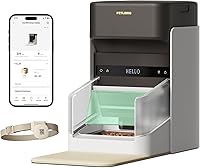
Think of this feeder as a combination lock that only your cat can open. The feeder comes with a lightweight RFID tag that attaches to your cat's collar. When your cat approaches the bowl, the feeder reads the tag and lifts the lid. Any other animal that approaches gets nothing. That is the core mechanic.
One important clarification that trips up a lot of buyers: this is not the same as the microchip your veterinarian implanted. That chip is a passive RFID device embedded under the skin at around 125 kHz, on a frequency used by millions of cats worldwide. The PETLIBRO feeder reads a proprietary collar tag, not an implanted chip. If your cat does not wear a collar, the feeder will not work.
Beyond the access control, the feeder holds around three liters of dry kibble (roughly three weeks of food for one cat), dispenses up to ten scheduled meals per day in precise 1/12-cup increments, and connects to the Pawsense app over dual-band Wi-Fi. A removable stainless steel bowl replaces the plastic alternatives that harbor bacteria. USB-C power with a battery backup means scheduled meals continue through outages.
Standard programmable feeders handle the scheduling part. Any cat can eat from them. This one checks identity first.
What the Data Shows
The RFID collar tag recognition works reliably. Cats.com (a channel with over 250,000 subscribers, with content vetted by in-house veterinarian Dr. Chris Vanderhoof) ran a direct multi-cat test and documented the result in their PETLIBRO One RFID feeder review: "The multicat functionality test worked really well. Gordon did try to get into Larry's feeder but he was not successful. I found that it was really secure." Across the 18,000+ Amazon ratings and a dozen independent YouTube reviews, false-negative detection failures, where the correct cat is not recognized, are rare. About 9 in 10 multi-cat households using this feeder confirm that unattended access to the wrong bowl has been solved.
Here is the nuance that drives the majority of disappointed reviews: the feeder only stops unattended access. It does not stop a second cat from pushing in alongside the eating cat while the bowl is open. The system is open-on-correct-tag only. There is no proximity sensor that closes the lid when an unauthorized cat is detected mid-meal. The Cats.com reviewer documented this plainly at the 12-minute mark: "It doesn't 100% stop your cat from stealing each other's food. If Larry is sitting here eating, Gordon is still able to sort of overtake him and steal the food." A user in the TheCatSite community described the same experience: "PetLibro feeder will open with the correct RFID chip, but there's no setting that will close it if it detects a different chip." This distinction matters enormously for households where cats always eat side-by-side. It matters much less for households where cats eat at different times, which is most of them.
Food jamming is the second most-documented failure mode, and it is almost entirely predictable. Around 1 in 5 users experience at least one jam, and the cause is nearly always kibble shape. PETLIBRO's own support documentation specifies a 2-15mm diameter, round-to-oval kibble requirement. Flat kibble, X-shaped kibble, triangular shapes, and anything prone to absorbing moisture will jam the dispensing chute. Cookie Cat, a YouTube channel with over 11,000 subscribers, ran a short-form video directly debunking the subscription myth that has spread confusion about this feeder, confirming that all core features are entirely free. The app's eating logs (visit time, visit duration, meal frequency per cat), remote scheduling of up to ten meals a day, low-food alerts, and remote feeding are all available without a paid subscription. Subscription adds enhanced health tracking analytics only.
The 76% four-and-five-star rate across over 18,000 Amazon raters reflects real owners whose specific problem was solved. The 10% who gave one star are concentrated in three failure modes: lid breaches by physically determined cats, food jamming from incompatible kibble, and early unit failures. The Flaws section below covers what you can do to avoid each one.
Flaws but Not Dealbreakers
The breakaway collar, which ships with the feeder as a safety measure, is designed to release under pressure. That is its job. But it creates a consequence worth knowing: if your cat catches the collar on something, pulls hard at a barrier, or simply has a very active day, the RFID tag can detach. No spare tag is included with the feeder. When the tag is gone, the feeder becomes a locked container your assigned cat cannot open. Experienced owners who understand this risk buy a replacement tag at setup rather than waiting for the first loss event.
The accordion lid takes between one and five seconds to close after the authorized cat steps away. That window is deliberate. A spring-loaded instantaneous close could catch a cat mid-withdrawal and create a safety hazard. But it means that a clever food-motivated cat can learn to rush in precisely during the closing delay. The Cats.com reviewer noted this behavioral exploit appears within days for cats that are paying attention. It is a manageable constraint, and cats that eat in different areas or at clearly different times rarely trigger it.
The accordion door itself has opinions about mealtime. When the eating cat presses its head into the bowl, the door contacts the back of the head and slides along its rails as the cat moves forward. The Cats.com reviewer described the resulting squeak as audible from across the apartment. This is a confirmed mechanical characteristic of the current design, not a defect, but it is worth knowing before you place the feeder in a bedroom or anywhere noise sensitivity matters.
One final note on the voice announcement feature: the feeder lets you record a voice message that plays when food dispenses, intended to call your cat to eat. The problem is that once you enable it during initial setup, there is no way to turn it off completely. The lowest volume setting still produces audible sound, and pulling the backup batteries does not reset the configuration. Multiple owners on Reddit reported being stuck with a feeder that announces every meal. If you are not sure you want it, skip it entirely during setup. You can always enable it later, but you cannot undo it.
Who This Feeder Is For (and Who Should Skip It)
If your cat has been prescribed Hill's k/d, Royal Canin Renal Support, a urinary s/o formula, a diabetic diet, or Hill's y/d for hyperthyroidism, and that cat lives with one or more cats who eat standard food, this feeder targets your exact situation. Multiple verified buyers describe this use case: Amanda, an Amazon reviewer, put it plainly after setting up two units for Donut (urinary crystals) and Mabel: "It is a bit expensive but absolutely worth the price." The eating logs add a layer of value beyond diet compliance. They give veterinarians a quantitative appetite baseline, something that is otherwise impossible to establish without direct observation. If Ada visits the feeder nine times for sixteen minutes on a normal day, and that number drops to four visits for six minutes the following week, that is clinical signal worth acting on.
For frequent travelers and long-hours workers, the feeder works well even without dietary restrictions involved. The ability to check whether your cat visited the bowl, for how long, and to schedule an extra meal remotely from a hotel room addresses a specific and real anxiety for cat owners traveling without a camera setup. The Cats.com reviewer captured the moment: "On the day we left for vacation I realized I had forgotten to set up Gordon's dinner. On the app I was able to remotely set up Gordon's dinner and I was also able to see that he had eaten it."
Households with a dominant food-bully cat that steals from a smaller or shyer cat are also well served, with the caveat from the data section above. The feeder reliably prevents the bully from raiding the submissive cat's bowl when no one is watching. If the two cats eat simultaneously and the bully is aggressive about it, physical barriers or separate feeding rooms will need to supplement the feeder.
Cat-and-dog households have a legitimate use case here too. Dave Fignar, a YouTube reviewer with a real two-cat, one-dog household, described the feeder as a game-changer for ensuring the dog stopped raiding the cat bowl. If hydration management matters alongside feeding, pairing this feeder with a dedicated water fountain like the Catit LED Flower Fountain gives a more complete picture of your cats' daily intake. For automated litter duty to complete the hands-off setup, see our Fumoi Self-Cleaning Litter Box review.
🎯 Is the PETLIBRO RFID Feeder Right for Your Household?
What best describes your feeding situation?
Setup, Kibble Compatibility, and the App
The feeder snaps together without tools. Most users are fully operational within 15-30 minutes. Bluetooth-assisted Wi-Fi pairing guides you through the initial connection, and the dual-band 5GHz and 2.4GHz support eliminates the "wrong band" connection failure that plagues older single-band feeders in modern mesh router environments.
Kibble compatibility is the single most important pre-purchase check. Before ordering, take your current bag of kibble and examine a few pieces. Three questions determine whether your kibble will work:
Shape: Round or oval kibble feeds reliably. Flat-faced, pointed, X-shaped, or triangular kibble is likely to jam. Specific formulas to watch: Hill's Prescription Diet Metabolic uses flat, irregular pieces. Royal Canin veterinary renal formulas use ring-shaped pieces that sit at the boundary of the specification. If you are buying this feeder specifically for a prescription diet, verify your exact kibble name with PETLIBRO support before ordering. They have encountered specific incompatible formulas in customer service cases.
Size: Measure the longest dimension of a piece. It must stay under 15mm. Most standard adult cat kibble is well within this range. Large-breed formulas are often not.
Moisture absorption: Kibble that softens quickly in humidity can swell and stick inside the dispenser. Replace the included desiccant bag every 10-15 days in humid climates to prevent moisture-induced jamming.
The Pawsense app covers remote meal scheduling, eating logs that record visit time and duration per cat, low-food alerts, a remote "feed now" function, and a custom LED display that shows each cat's name. No subscription is required for any of these features. The eating log's clinical value is real: visit duration and frequency per day provide the quantitative baseline that makes subtle appetite changes visible before they become vet visits. Multi-feeder households should note that units must be placed at least 10 inches apart to prevent RFID signal crosstalk between them, an underdocumented requirement that can appear as a mysterious read failure if ignored.
PETLIBRO vs. SureFeed: Which One Is Right for Your Cats
These two feeders solve the same problem with fundamentally different architectures. The right choice comes down to one question: do your cats wear collars?
| Feature | PETLIBRO RFID Feeder | SureFeed Microchip Pet Feeder |
|---|---|---|
| RFID method | Collar tag (proprietary) | Implanted microchip (no collar) |
| Scheduled dispensing | Yes, up to 10 meals/day | No (proximity-open only) |
| App connectivity | Yes (Pawsense app, free) | No (basic model) |
| Food reservoir | ~3L hopper | Small bowl only |
| Estimated price | Around $140/unit | Around $150/unit |
| Subscription required | No | No |
| Setup | Wi-Fi required | Batteries only, simpler |
PETLIBRO wins on features, scheduling, app connectivity, hopper size, and eating data. Cameron Alder Jade, a YouTube reviewer with over 5,000 subscribers, covered both products in a direct head-to-head comparison and reached the same conclusion the community has broadly converged on: PETLIBRO wins if your cats wear collars and you want scheduled meal delivery; SureFeed wins if your cats are indoor-only collar-avoiders. SureFeed has been on the market since 2013 and has no equivalent to the app, the auto-dispense, or the eating logs. PETLIBRO has been on the market since 2024 and has no equivalent to SureFeed's microchip-reading architecture.
Multiple reviewers across platforms have made the same observation: they wish a product existed that combined SureFeed's implanted-chip reading with PETLIBRO's scheduling and app features. That product does not currently exist at this price tier.
For collar-free cats who need app monitoring, SureFeed Microchip Pet Feeder Connect adds Hub-based app connectivity to SureFeed's microchip architecture at a higher price, though it still does not dispense on a schedule.


Final Verdict
For the right household, the PETLIBRO RFID feeder genuinely delivers: diet compliance for a CKD or urinary cat, eating logs that give a vet something to work with, sleep uninterrupted by a 3am feeding demand, and the quiet reassurance of knowing your cat ate while you were away. A veterinary internist specializing in chronic feline disease management offered a complication worth sitting with: "The collar dependency is the harder problem: I've prescribed prescription renal diets to cats who won't tolerate a collar under any circumstances, and right now there is no good solution for those households except feeding station separation, which requires the owner to be present. That's a gap the market has not yet closed."
That gap is real and worth naming. No product currently combines microchip reading with timed dispensing at this price tier.
Frequently Asked Questions
Will this feeder work with my cat's implanted microchip?
No. Implanted veterinary microchips operate on the ISO 11784/11785 standard at 125 kHz, a frequency shared by all chipped animals. Distinguishing two chipped cats in close proximity is a harder signal engineering problem than reading a single proprietary collar tag. PETLIBRO chose the collar-tag architecture because of this distinction, and their official documentation confirms the feeder "does not yet recognize implanted microchips," with microchip compatibility listed as a focus for future development. Until that product exists, collar-averse indoor cats need the SureFeed Microchip Pet Feeder instead.
What kibble brands are known to cause jamming?
Our research identified specific formula types rather than brand-level failures. Formulas with confirmed jam risk: Hill's Prescription Diet Metabolic (flat, irregular pieces), Royal Canin veterinary renal formulas with ring-shaped pieces (borderline at 12-14mm diameter, high moisture-absorption risk), Temptations-style treat shapes with X or star geometry, and any dental kibble that swells with humidity. The pattern is geometry and moisture, not brand. Before purchasing, physically examine your kibble against the 2-15mm round-to-oval specification. If uncertain, contact PETLIBRO support with your exact kibble name, as they maintain documented incompatible formula cases from customer service records.
Do I need a subscription to use the app?
No. Cookie Cat's subscription-myth debunking video confirmed what multiple Amazon reviewers corroborate: scheduling up to ten meals per day, eating activity logs showing visit time and duration, remote "feed now," low-food alerts, and the customizable LED display are all free. The optional paid subscription adds enhanced health tracking analytics only. This misconception is widespread enough that a dedicated video correcting it became necessary.
How do I stop a second cat from stealing food while my cat is eating?
The feeder blocks unattended access but cannot close on an unauthorized cat mid-meal. For simultaneous-access theft, the most reported effective workarounds from community data are: (a) 8-inch clear acrylic side risers that create a narrower approach corridor, reducing the physical opportunity for a second cat to push in alongside; (b) placing the feeder in a corner or against a wall where the lateral approach is limited; and (c) closing a door during the 15-20 minute meal window for complete separation. The acrylic shield solution was documented in TheCatSite community forums by a user dealing with a persistent simultaneous-access issue. PETLIBRO's official documentation does not currently address this workaround.
- One of your cats is on a prescription diet (CKD, urinary, diabetic, thyroid)
- You travel frequently and want remote eating confirmation via app
- You have a bully cat raiding another cat's bowl during unattended periods
- Your cats are indoor-only collar-avoiders
- Your kibble is flat, X-shaped, triangular, or larger than 15mm
- Your cats always eat side-by-side and you need complete separation