 TruthfulPaws
 Catit Flower Fountain Review: 79% Love It, But 14% Hit This Problem

Quick Verdict
Most cats drink more within days, and about 4 in 5 adopt the fountain on their own. The gap between the happy majority and the 14% who hit pump failure is almost entirely weekly maintenance discipline. The corner-free reservoir makes cleaning fast, but the filter housing underneath still needs a bottle brush.

Kate Tully Ellsworth noticed something strange about her cat Shadow. The hairmat problem that had plagued Shadow for months was clearing up. The culprit, it turned out, was not diet or grooming habits. It was a twenty-dollar cat fountain. "Once my cats tried out the Catit water fountain, it was game over," she wrote as a verified Amazon buyer. "They refuse to drink out of a bowl now and their hydration has increased significantly. Shadow's hair mats decreased after she started drinking more."
That is one owner's experience. We analyzed 49,000+ Amazon reviews (95% verified purchases) and 8 YouTube videos to understand what the Catit LED Flower Fountain actually delivers. The short version: 79% of owners give it 4 or 5 stars. A genuine 14% encounter pump failure within months. What separates those two outcomes is almost entirely one user behavior.
What Is the Catit LED Flower Fountain?
Cat physiology creates a hydration problem most owners do not realize they have. Cats evolved as desert obligate carnivores with a weaker thirst drive than dogs. Many cats eating primarily dry food are chronically, mildly dehydrated. Moving water helps because it triggers a prey-locating instinct — flowing water signals freshness in a way that a still bowl does not.
The Catit LED Flower Fountain is a 3-liter plastic fountain with a USB-powered pump and three selectable flow modes: gentle streams through the flower petals, a bubbling center cats can lap from directly, and still water pooled in the petal pockets for cats who prefer nearly stationary water. That third option is underappreciated. Cats accustomed to bowls often transition through the petal-pocket mode before warming to the flowing styles.
FreakOut Tech, a YouTube reviewer with over 20,000 subscribers who ran a direct Catit vs. Drinkwell head-to-head comparison, described the filter system this way: "The triple action filter purifies your cat's drinking water in three ways: cotton mesh filters out debris, active carbon removes odors and impurities, and ion exchange resin softens minerals like magnesium and calcium." A blue LED built into the pump housing glows at floor level, helping cats locate the fountain at night. It cannot be turned off.
A stainless steel lid upgrade variant replaces the top bowl with a dishwasher-safe steel surface but does not change the pump, filter housing, or reliability-relevant components beneath.
What the Data Shows
Cat acceptance is high, but not universal. About 4 in 5 cats adopt the Catit within a few days, based on owner feedback across 49,000+ reviews. Verified Amazon buyers describe cats refusing to return to bowls, kittens figuring it out almost instantly, and measurable drops in urinary health issues owners attribute to increased intake. The remaining 1 in 5 presents everything from temporary hesitation to permanent indifference. One verified buyer was direct: "My cat appeared completely uninterested and unaffected by the water flow despite weeks of encouragement. It became an expensive decoration." At this price tier, that risk is financially manageable in a way it is not with a more expensive unit.
Cleaning ease is the product's strongest competitive differentiator. The reservoir uses smooth curves with no molded corners or ridges. Competitors including the Harmony and various generic brands required Q-tips and scrubbing tools to reach corners that accumulated slime within a week.
"Catit has none of that — everything is a smooth curve that can be wiped with a sponge or towel. After two weeks with one Catit fountain, no bioslime had accumulated, whereas previous fountains had bioslime within a week."
The three flow modes matter in practice. One verified Amazon buyer described it: "I like that there are different settings for how the water comes out. My cats are splashers so having the flower attachment to make little streams stops them from making a mess while still giving them lots of water to drink." The petal-pocket still-water option specifically serves cats that show no interest in moving water initially.
Noise behavior is conditional and informative. "So quiet I don't even realize it's running," reported one verified Amazon buyer. Noise ratings on Amazon are the most polarized of any measured aspect. The fountain runs silently when the reservoir is full and well-maintained. It becomes noticeably louder as water drops or as the motor ages. Progressive loudness at a stable water level is an early signal of impeller or motor strain.
Our analysis team adds an important caveat: "The Catit's cleaning scores are real — that corner-free reservoir genuinely is easier to wipe down than anything else at this price. But 'easy to clean the outside' and 'staying ahead of the biofilm inside' are two completely different problems. The filter housing and impeller cavity run warm and wet 24/7 in contact with organic material, producing biofilm within days, not weeks. The owners who get two years out of this fountain treat weekly cleaning as non-negotiable rather than optional."
Value at entry is real; long-term cost is not what the price tag implies. FreakOut Tech calculated that annual filter costs run higher for the Catit than the Drinkwell, despite the Catit being the cheaper unit to buy. The specific figures appear in the comparison table below. Amazon buyers report costs toward the higher end of the estimated range at the recommended 3-4 week replacement schedule. Third-party filters and coffee-filter substitutes can reduce this substantially, covered in the FAQ below.
Flaws but Not Dealbreakers
The pump is the product's primary weakness, and it is a consequential one. Amazon's motor lifespan data is the lowest-rated aspect across all reviewed dimensions. Failure reports cluster at three points: within the first two weeks (likely manufacturing defects), at 2-3 months, and at 4-6 months. Verified Amazon buyer Smithy put the worst-case scenario plainly: "Owned four Catit fountains total. Pumps consistently failed within months across all of them. The persistent vibration and noise issues remained unresolved across product generations." Another verified buyer, Kris Raymer, reported two motor replacements in under a year despite regular cleaning and good water quality. A replacement pump from Hagen exists and costs roughly the price of a fast-food meal, but it can also fail on some units. Running the pump dry is the leading preventable cause.
A distinct and underreported failure mode is floor flooding. When the filter develops even a minor clog, or when air becomes trapped in the pump housing, the fountain can reroute water outside the bowl entirely. Multiple owners described this failure: "Not a drip, not a small spill. We're talking half the reservoir dumped onto the floor, soaking subfloors and damaging furniture." Monitoring the fountain for the first few minutes after any reassembly or filter change is the best way to catch this before it causes damage.
Filter replacement cost erodes the long-term value in ways the purchase price does not advertise. One verified Amazon buyer did the math: "Filters cost $12 for a 2-pack and need changing every 3-4 weeks. That adds up to over $70 a year for a $20 fountain. I switched to coffee filters and they work fine." The coffee filter substitution handles mechanical debris but delivers none of the activated carbon or ion exchange mineral softening the triple-action filter provides.
The suction cups under the motor base detach over time. When the motor slides, it amplifies vibration and accelerates motor wear. Amazon buyers document suction cup detachment across 28 mentions. The plastic filter housing, not the reservoir, contains the tightest corners in the whole system, making it the component most prone to mold when cleaning slips.
The blue LED cannot be turned off. For most cats this is neutral or positive, but a small minority with anxiety or light sensitivity may avoid a glowing object at floor level. Taping over the LED housing resolves this in minutes.

🎯 Which Cat Fountain Is Right for Your Household?
How many cats will share this fountain?
How to Get the Most Out of It
The maintenance protocol is what puts you in the satisfied majority. It requires consistency, not complexity.
Daily: Check the water level. Keep the reservoir above the halfway mark at all times. Even briefly running the pump dry degrades the motor seal irreversibly. A 30-second glance at the water level indicator each morning is enough.
Weekly: Full disassembly. Wash the reservoir with warm water and mild dish soap using a soft sponge (never abrasive materials, which create micro-scratches). Use a small bottle brush on the pump impeller housing and intake. Rinse the filter under cold running water, no soap. Allow all components to air-dry before reassembly. Total time: 10-15 minutes. After any reassembly, watch the fountain for the first few minutes to confirm water is circulating within the bowl, not escaping around the sides. Filter seating and pump air pockets are the two causes of the flooding failure mode described above.
Monthly: Replace the filter cartridge, or rinse and inspect a generic equivalent. Check the suction cups under the motor base. Inspect the impeller for hair or debris.
For initial cat introduction: Start in flower-stream mode, the quietest setting. Leave treats near the fountain for 3-5 days before expecting your cat to drink from it. Most cats investigate within 24-48 hours. If your cat avoids it after a week, try partially covering the LED.
Buy a spare pump at the same time you buy the fountain. When the original pump fails, having a replacement on hand means a 10-minute fix instead of a days-long wait while your cat rediscovers the water bowl. A USB extension cable is worth adding at setup too, since the power cord is short enough to limit placement options in some rooms.
How It Compares
| Fountain | Price Tier | Capacity | Material | Flow Modes | Annual Filter Cost (est.) | Best For |
|---|---|---|---|---|---|---|
| Catit LED Flower Fountain | Budget | 3 liters | Plastic | 3 modes | $39-$70+ | First fountain, 1-2 cats |
| PetSafe Drinkwell 1-Gallon | Mid | 3.8 liters | Plastic | 1 mode | $25-$35 | 2-3 cats, cost-conscious |
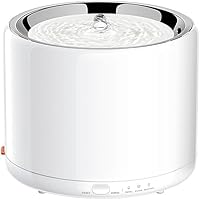
| PetKit EverSweet 3 | Mid | Varies | Stainless | 2 modes | Varies | Low-maintenance, upgrade path |
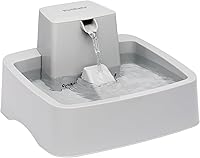
The FreakOut Tech Catit vs. Drinkwell head-to-head comparison (from a channel with over 20,000 subscribers) is the most thorough direct analysis we found. The Catit wins on price, cleaning ease, and flow variety. The Drinkwell wins on capacity and is generally more appropriate when more than two cats share a single unit. Annual filter costs favor the Drinkwell despite its higher purchase price, as shown in the table above.
The PetKit EverSweet 3 is a different category of product. Its stainless construction, self-cleaning impeller, and longer filter cycles address the Catit's primary weaknesses directly. Tom from Kitty Help Desk, who used the plastic Catit for 2-3 years before upgrading, pinpointed the core reason in a review of the stainless upgrade: plastic accumulates micro-abrasions from cat tongue contact and normal cleaning. Holly from Cats and Kittens confirmed in a widely-viewed comparison of 8 fountains: "Plastic really isn't the best material for a water fountain for a cat because their rough tongues can rough up the plastic and collect bacteria even if you keep it clean."
The Catit is not the final fountain you will ever own. It is the right fountain to own first, before you know whether your cat will use any fountain at all. Once you have that confirmation, the upgrade decision makes itself.
Frequently Asked Questions
How often should I clean the Catit fountain?
Weekly is the minimum, but the reservoir and the filter housing are two different problems. The smooth exterior stays relatively clean. The filter housing and pump impeller cavity are warm and wet around the clock in contact with organic material. Biofilm colonies can establish there within 48-72 hours in a warm room. A Trustpilot reviewer documented black mold developing within weeks of a new filter installation, noting that Catit attributed it to their home cleanliness. Weekly impeller cleaning with a bottle brush is what actually prevents this. If you miss a week, do not skip the impeller when you catch up.
Can I use the Catit for multiple cats?
The 3-liter capacity is adequate for two cats without daily refills and manageable for three cats with more vigilant water-level monitoring. For multi-cat households that also need diet separation at mealtime, our PETLIBRO RFID Automatic Cat Feeder review covers the leading option for keeping cats out of each other's food. Beyond three cats, the pump runs harder, the filter saturates faster, and you would need a 3-week rather than 4-week filter replacement schedule. At four or more cats, a higher-capacity unit with a more robust motor is the better choice. Some owners with three cats buy two Catit units and rotate them through cleaning cycles.
Are there cheaper filters for the Catit fountain?
Yes. Third-party compatible triple-action filters are available from multiple Amazon sellers at roughly a third of the official Catit price per filter. Generic versions perform comparably for most households. Rinsing your current filter under cold water weekly extends its service life. The coffee filter workaround handles mechanical debris but provides no activated carbon or ion exchange mineral softening. For cats with urinary health concerns or households with hard tap water, a filter with all three components is worth the modest extra cost.
My cat is scared of the fountain. What should I do?
Start with the fountain off near where your cat already spends time. Let them investigate it as an inert object for a full day before turning it on. Run it first in flower-stream mode, the quietest setting. Leave high-value treats near it and let the cat approach on its own schedule. Most cats make contact within 3-5 days. If your cat shows no interest after a week, try covering the LED with opaque tape. About 1 in 5 cats will not adopt any moving-water fountain. If yours is in that group, a wider shallow bowl is more likely to help than a different fountain design.
Is the stainless steel version worth the upgrade?
The stainless steel upgrade replaces the top bowl with a dishwasher-safe steel surface — a genuine hygiene improvement for the water-contact surface your cat touches most. What it does not change is the plastic filter housing (the component most prone to mold), the pump (identical motor with the same failure profile), or the flooding risk. Tom from Kitty Help Desk confirmed this after upgrading: the core maintenance requirements and filter housing are identical across both versions. If dishwasher cleaning of the top bowl matters, the upgrade is worth it. If you are hoping it resolves pump reliability or leaking, it does not.
Final Verdict
The Catit LED Flower Fountain works the honest way: it genuinely delivers for most buyers, and it genuinely fails a meaningful minority. The gap between those outcomes is maintenance discipline, specifically keeping the reservoir full and performing a complete disassembly weekly. For a first-time fountain buyer with one or two cats who can commit to that habit, this is the best-value entry into cat hydration at this price. For anyone who wants a product that succeeds without active participation, the Catit will disappoint.
- You're a first-time fountain buyer with 1-2 cats, testing whether your cat will adopt moving water
- You will commit to a weekly 15-minute disassembly + daily water-level checks
- Your cat is faucet-curious or has shown interest in moving water
- You have four or more cats (pump strain and filter saturation accelerate)
- Your priority is a set-and-forget appliance that tolerates skipped weeks
- Your cat is highly anxious or noise-sensitive to bubbling sounds