 TruthfulPaws
 Royal Canin Small Breed: 9 in 10 Picky Dogs Eat It. Here's the Catch

Quick Verdict
About 9 in 10 picky small dogs eat it willingly, including dogs on hunger strike from every other WSAVA kibble. Corn sits at the top of the ingredient list and there's no chicken-free option. Purina Pro Plan is cheaper with named whole chicken — go there if your dog is a reliable eater.

Venus had been buying breed-specific Royal Canin for her dogs for years: Shih Tzu formula, Yorkshire Terrier formula, rotating to keep things interesting. Then one of her dogs turned 16 and started struggling to chew. On a whim, she picked up a bag of the general Royal Canin Small Breed Adult and noticed something immediately: "They went from eating 1/2-1x a day to 2x a day. I don't have to mix anything in their food. My 16-year-old dog could chew it without needing water added." She also noted the dogs liked it more than the breed-specific formulas she had been buying.
The ingredient list is the part that stops careful shoppers cold. Corn sits at the top, followed by chicken by-product meal, not the whole named chicken you see on premium competitors. The price is higher than many of those competitors. And yet the Amazon dataset stretches to more than 13,000 verified reviews at 4.7/5, Reddit nutrition communities defend it with citations from practicing veterinarians, and dogs that refused every other food eat it willingly. We analyzed 38 Reddit posts, 7 YouTube videos, and over 13,000 Amazon reviews to understand why, and where the real limits are.
What Is Royal Canin Small Breed Adult?
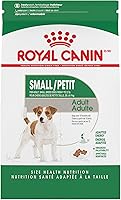
Royal Canin Small Breed Adult is a dry kibble formulated for adult dogs weighing 9 to 22 lbs. That weight range matters: small breeds have meaningfully higher metabolic rates than large breeds, which means a scaled-down version of a large breed formula simply doesn't calibrate calories or nutrient density correctly. This formula does.
The kibble is star-shaped, which is a functional choice, not a cosmetic one. The geometry fits smaller mouths and tooth structure, reducing the gulping behavior that can cause digestive upset in fast-eating small dogs. Venus's observation that her elderly dog could finally chew without needing water reflects how different this shape is from the round kibble in Royal Canin's breed-specific lines.
WSAVA compliance is the other credential worth understanding. The World Small Animal Veterinary Association sets standards for nutritional research rigor, manufacturing quality control, and feeding trial methodology that most boutique and "natural" brands do not meet. Royal Canin is one of four brands that consistently passes this bar. This SKU is the general Small Adult formula, not a breed-specific one. Multiple reviewers, including Venus, found their dogs preferred it over breed-specific Royal Canin variants for everyday feeding.
Dogs under 9 lbs should look at Royal Canin X-Small or a breed-specific formula instead, as the kibble geometry is calibrated for the 9-22 lb range.
What the Data Shows
Palatability is genuinely exceptional. About 9 in 10 buyers across more than 13,000 verified Amazon reviews gave this food four or five stars, with 85% landing at five. That alignment is not common in pet food reviews, where a food that divides opinion typically shows a wider spread. What reinforces the number is the nature of the reports: not "my dog eats it," but:
"My picky poodle who goes on hunger strikes eats this without persuasion."
And: "my dog went from eating once a day to twice a day." Royal Canin offers a money-back Palatability Guarantee, which reflects how confident they are in this figure.
Veterinary endorsement is consistent and credentialed. Across our Reddit research, six practicing vets and vet-techs endorsed Royal Canin by name without being asked. Future-Dimension1430, a veterinary nurse with over 20 years of experience, put it plainly in a debate about whether owners should feel guilty feeding Royal Canin: "Royal Canin, Purina and Hills are not crap. They have decades of research that prove they will keep your pet healthy." This is not an unusual position in clinical settings.
The cardiac safety distinction is specific and documented. Grain-free diets have been linked to dilated cardiomyopathy in dogs, with the culprit being the peas and lentils used to replace grains. Royal Canin avoids both. In a widely-discussed thread sharing peer-reviewed research on a new type of canine bladder stone, littlehamsterz, a veterinarian, confirmed that Royal Canin was not identified as containing the problematic ingredient (choline bitartrate) implicated in the new research. The recommendation was direct: "Please keep your pet on WSAVA compliant diets only such as Purina, Royal Canin, Hill's/Science Diet, IAMs."
Digestive improvement is real, but transition-dependent. About 3 in 4 owners report positive digestive outcomes, which rises substantially when proper gradual transition is followed. The failure mode is consistent: abrupt switching. A verified Amazon buyer, Kindle Customer, documented this firsthand. Her family ran out of puppy food and borrowed the adult formula for a couple of days. All the dogs had diarrhea. With the proper gradual protocol on the next transition, there was almost no digestive upset at all. The food did not change between those two experiences.
Coat and energy improvement appears within weeks. Among owners who specifically mentioned coat condition, about 4 in 5 reported visible improvement, typically within two to four weeks. The mechanism is real: EPA and DHA fatty acids are included in the formula and support skin and coat health. Alondra marie laureano, a verified Amazon buyer, noted after making the switch:
"A significant improvement in his daily energy levels, digestion, and even the shine of his coat."
Flaws but Not Dealbreakers
The most persistent criticism across all three platforms is the mismatch between price and ingredient quality. Corn sits at the first position on the ingredient list, and chicken by-product meal is the only protein source. Royal Canin was reformulated at some point to place corn ahead of chicken, and long-term buyers who noticed a coat or stool change after opening a "new" bag are likely observing a real formulation shift, not imagination. Rachel Fusaro, a dog care creator on YouTube with over 500,000 subscribers, asks the reasonable question in her analysis of why vets recommend this brand: "When we have these huge massive conglomerate pet food companies that charge an arm and a leg for food, why aren't they doing both?" Both nutrients and quality whole-food ingredients, she means. The critique is fair. The food produces well-documented health outcomes despite its base ingredients, not because of them, and competitors like Purina Pro Plan achieve comparable WSAVA compliance with named whole chicken as their first ingredient at a lower price per pound.
There is no chicken-free dry food option in the Royal Canin small breed adult range. Chicken sensitivity is the most common food allergy in dogs. For an otherwise loyal Royal Canin owner whose dog develops a chicken reaction, the OTC options simply don't exist. For dogs with chicken sensitivity, our Purina Pro Plan Sensitive Skin & Stomach review covers the leading salmon-based alternative. The prescription hydrolyzed protein diet is an expensive workaround, but it is not a daily maintenance solution for a healthy allergic dog.
The transparency issue is more specific and harder to dismiss. Dr. Wright, a practicing veterinarian who publishes at AnimalDocRea on YouTube with over 16,000 subscribers, contacted Royal Canin directly and asked for the calcium and phosphorus percentages in their standard lines. These ratios matter when managing a senior patient with early renal disease. He confirmed in his review of Royal Canin's breed-specific formulas that they declined to share the data. His assessment: "For a brand whose entire value proposition is scientific rigor and transparency, refusing to give a veterinarian basic mineral ratio data is a contradiction I find difficult to reconcile." One smaller but real inconvenience: the bag's ziplock reportedly fails after several weeks of repeated use, requiring owners of larger bags to transfer kibble to an airtight container.
Who It's For (and Who Should Skip It)
If your small dog has ever gone on a hunger strike, refused the food that worked fine last month, or required persuasion techniques (water, broth, toppers) to eat reliably, this is the most likely single intervention to solve it. Small breeds are statistically more prone to food selectivity than large breeds, and the cost of persistent refusal, especially in toy breeds where hypoglycemia is a real risk, is not trivial. Kima2remy, a Yorkie owner with two dogs ages seven and two, described their experience in a thread of honest owner opinions about Royal Canin: "Recommended by my vet. Very low tartar and no digestive issues. Coats are silky and shiny. Never plan on feeding my precious babies otherwise." That pattern appears across hundreds of reports in our data.
The coat improvements Royal Canin owners report (silky texture, reduced shedding) show up faster with regular grooming that removes dead undercoat. For small breeds with dense or curly coats, a professional-grade slicker brush designed for doodle and poodle coats reaches the skin layer where standard pet-store brushes fail.
If you are transitioning a dog off grain-free food after a DCM diagnosis, a vet recommendation following the FDA investigation, or a recent bladder stone concern, Royal Canin is the brand most explicitly cleared in current research. This is not a generic "grain-inclusive is safer" recommendation. Thisgingerhasasoul, an emergency vet who also worked in primary care, explained on a high-engagement r/DogFood thread on diet-induced dilated cardiomyopathy that the WSAVA prescription diets have not been associated with DCM, specifically because they avoid the pea and lentil substitutes that drive the nutrient profile problems. The clearance in the 2025 bladder stone research extends this safety distinction to a newer concern.
If your vet has specifically recommended Royal Canin and your dog is in the 9-22 lb range, this formula is likely what they have in mind, and the research base they are drawing on is real. At the 14 lb or 30 lb bag size, the per-pound cost is substantially lower than the small convenience sizes, making the premium more defensible.
Skip it if your dog has a confirmed or suspected chicken allergy (no alternative protein option exists in this line).
Skip it if your dog eats Purina Pro Plan Small Breed Adult without issue (better ingredient quality, lower price, same WSAVA compliance).
🎯 Which Royal Canin Formula Is Right for Your Small Dog?
How much does your dog weigh?
Getting the Transition Right
The most common cause of negative Royal Canin reviews is not the food itself. It is an abrupt switch. Every digestive complaint in our dataset was traceable to one of two causes: an overnight swap or an individual sensitivity that persisted past the transition window. The Kindle Customer's story above illustrates the first cause clearly. The protocol Royal Canin recommends, and that community data supports, is:
| Day | New Food | Old Food |
|---|---|---|
| 1-2 | 25% | 75% |
| 3-4 | 50% | 50% |
| 5-6 | 75% | 25% |
| 7+ | 100% | 0% |
If loose stools begin within 48 hours of an abrupt switch, that is a transition reaction, not food intolerance. If digestive issues persist past the 10-day mark even with a gradual protocol, consult your vet, as individual sensitivities do occur in a small minority of dogs.
The Small Breed Adult formula is designed for dogs 9 to 22 lbs. Dogs under 9 lbs should use Royal Canin X-Small or a breed-specific formula with a smaller kibble. Dogs over 22 lbs need a medium or large breed formula calibrated for different caloric requirements.
Bag size affects value significantly. The 2.5 lb bag carries the highest per-pound cost by a wide margin, roughly three times the per-pound cost of the 30 lb bag. The 14 lb bag sits in between and represents a reasonable balance for owners not ready to commit to bulk. The 4 lb bag is a good trial size if you are unsure whether your dog will accept it, though the Palatability Guarantee means you can return a larger bag if necessary.
Transfer kibble to an airtight container after opening. The bag's ziplock, as noted in community data, is not reliable past several weeks of use.
How It Compares
Royal Canin is not the only WSAVA-compliant kibble for small breeds. The right choice depends almost entirely on one variable: whether your dog has food selectivity issues.
| Product | First Protein | WSAVA Compliant | Best For |
|---|---|---|---|
| Royal Canin Small Breed Adult | Chicken by-product meal | Yes | Picky eaters, DCM-transition dogs |
| Purina Pro Plan Small Breed Adult | Chicken (named whole) | Yes | Reliable eaters, budget-conscious owners |
| Hill's Science Diet Small & Mini Adult | Chicken meal | Yes | Senior dogs where mineral transparency matters |
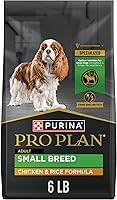
The Royal Canin versus Purina Pro Plan comparison comes down to that one question. Purina Pro Plan uses named whole chicken as its first ingredient, a factual quality advantage. It costs less per pound at comparable bag sizes. It meets the same WSAVA compliance standards and has not been implicated in DCM or bladder stone research. For dogs that eat reliably, it is the stronger value choice. Where Royal Canin wins is palatability: the community data is consistent across Reddit and Amazon that food-selective small dogs accept Royal Canin when they reject Purina Pro Plan. For owners who have spent months coaxing a Yorkie or Chihuahua to eat, that distinction is not a minor detail.
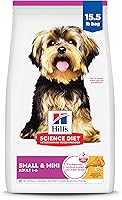
Hill's Science Diet Small & Mini sits at overlapping price points with Royal Canin and has comparable vet endorsement. The meaningful difference is in transparency: Hill's publishes mineral ratio data, including calcium and phosphorus percentages, which matters specifically for owners managing senior dogs with early renal changes. Royal Canin's refusal to share that data, as documented by Dr. Wright, is a real limitation in that context. For healthy adults, the palatability edge and the breed-specific formula depth tend to favor Royal Canin in head-to-head comparisons from our Reddit research.
Boutique brands like Blue Buffalo Small Breed Adult present a different kind of trade-off. The ingredient labels are more appealing, but Blue Buffalo's high pea and legume concentrations are implicated in both the FDA DCM investigation and the 2025 bladder stone research. The BK Pets channel, which works with a board-certified pet nutritionist, rated Royal Canin's research backing above boutique alternatives in a 2026 dog food analysis, while still flagging ingredient sourcing as the brand's persistent weak point. The cleaner-looking label does not reflect a safer product for small dogs.

Frequently Asked Questions
Is Royal Canin Small Breed Adult safe after the formula change?
The food is WSAVA-compliant and nutritionally complete after the reformulation. The corn-first ingredient concern and what it means for value at this price point are covered in detail in the Flaws section above. The reformulation is a value-quality issue, not a safety one.
Can I feed Royal Canin Small Breed Adult to a senior dog?
For healthy seniors, yes. Multiple owners in our research report dogs thriving on Royal Canin at ages 12 through 17. The star-shaped kibble is soft enough for elderly dogs with dental limitations to chew without water added, which Venus documented with her 16-year-old dog. For seniors with suspected or confirmed early kidney disease, however, the absence of disclosed calcium and phosphorus ratio data is a material gap. Dr. Wright, a practicing veterinarian, found that Royal Canin declined to share this data when asked directly. Owners managing senior dogs with early renal changes should discuss mineral ratios specifically with their vet before committing to this food.
How does the Palatability Guarantee work?
Royal Canin offers a money-back guarantee if your dog refuses the food. The guarantee reflects genuine internal confidence in the acceptance rate. Contact Royal Canin's customer service with proof of purchase if your dog refuses the food after a proper gradual transition. The existence of this program is one reason the palatability claim is taken seriously across the community data, including by veterinarians who recommend it for food-selective dogs.
Why does Royal Canin cost more than Purina Pro Plan if Pro Plan has better ingredients?
The premium is not explained by ingredient quality, which genuinely trails Purina Pro Plan at comparable price points. It is explained by two other factors: palatability performance and brand trust built through the prescription diet line. Royal Canin's prescription formulas (renal, gastrointestinal, hepatic, post-surgical recovery) are used in veterinary clinics for seriously ill animals. Owners who have watched a sick dog recover on Royal Canin prescription food carry that trust into their OTC purchasing decisions. The OTC line benefits from a halo earned in clinical settings where the brand's outcomes are genuinely hard to dispute.
My dog had diarrhea after switching. Is that a sign Royal Canin doesn't agree with them?
If diarrhea started within 48 hours of an abrupt switch, it is almost certainly a transition reaction, not food intolerance. Follow the gradual protocol in the Getting the Transition Right section above. If loose stools persist past the 10-day mark despite following that protocol, that is more likely a genuine sensitivity and warrants a vet conversation.
Final Verdict
Royal Canin Small Breed Adult delivers on its core promises: a picky small dog that has gone through three other WSAVA kibbles will almost certainly eat this one, the cardiac and bladder stone safety record is specifically documented rather than assumed, and the research backing from multiple practicing veterinarians across Reddit and Amazon is credible. The real limitations are a price-to-ingredient-value gap and the absence of any chicken-free alternative for sensitive dogs.
- Your small dog goes on hunger strikes or refuses other WSAVA kibbles
- You're transitioning off grain-free food after a DCM or bladder-stone concern
- Your vet recommended it specifically and your dog is 9-22 lbs
- Your dog eats Purina Pro Plan Small Breed Adult without issue
- Your dog has a confirmed chicken allergy (no chicken-free OTC option)
- Ingredient sourcing quality matters more to you than outcomes